Articles
News, research and field notes from the Seismology Research Centre.
 Research
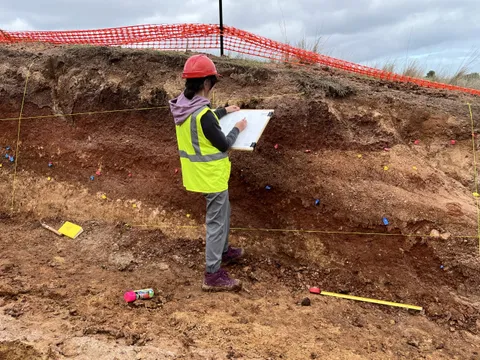
Assessing Earthquake Hazard
Every major infrastructure project must consider site-specific hazards — and earthquakes threaten dams, power stations, pipelines and data centres.
Seismology Research Centre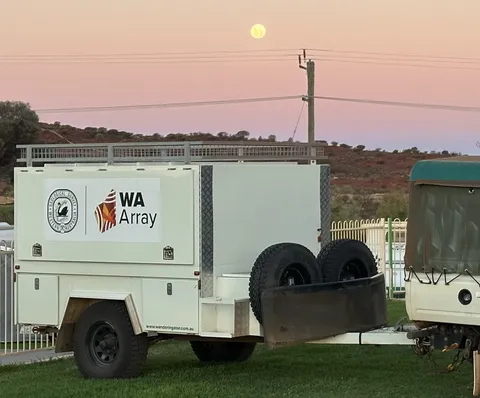 Field work
The WA Array Project
The SRC supplied seismographs to a landmark Western Australian earth science project, and helped deploy one phase of its more than 150 seismic stations.
Seismology Research Centre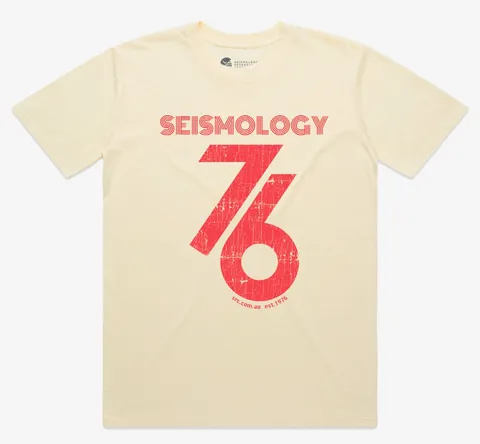 Shop
Seismology Shop
It’s the SRC’s 50th anniversary, and we’ve made a retro Seismology t-shirt to celebrate. Get one in our online store today.
Seismology Research Centre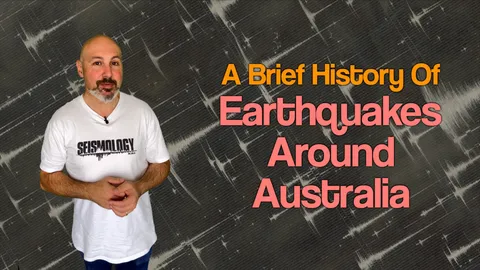 Video
History of Australian Earthquakes
We’ve compiled a short series of clips highlighting a few interesting earthquake facts for each Australian state and territory into a single video.
Seismology Research Centre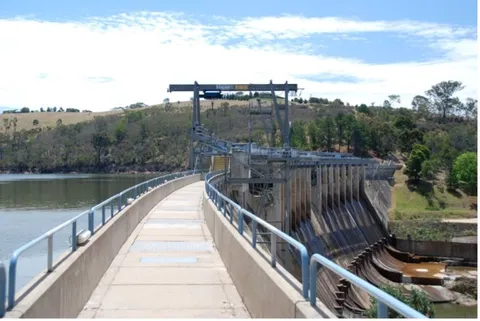 Engineering
Dynamic Analysis of a Dam using Strong Motion Accelerograph Data
The SRC installed triaxial strong motion accelerographs on Glenmaggie Dam for the Victorian Water Industry network — and analysed the dam’s dynamic response.
Seismology Research Centre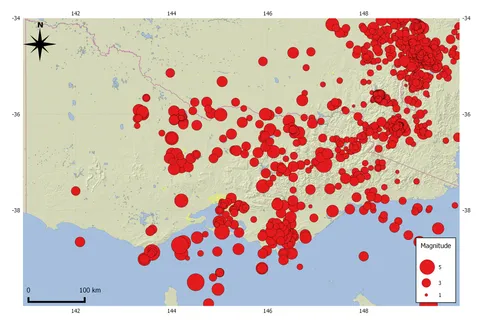 History
Earthquake Alarm Service for Victoria
Victoria is one of Australia’s most uniformly monitored states for earthquakes — from a Preston Institute research project to a statewide alarm network.
Seismology Research Centre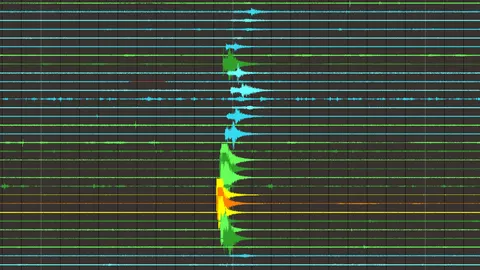 Live data
SRC earthquake data live on YouTube
The SRC now streams live earthquake data from stations across southeast Australia to YouTube — so you can see it on nearby stations if you felt one.
Seismology Research Centre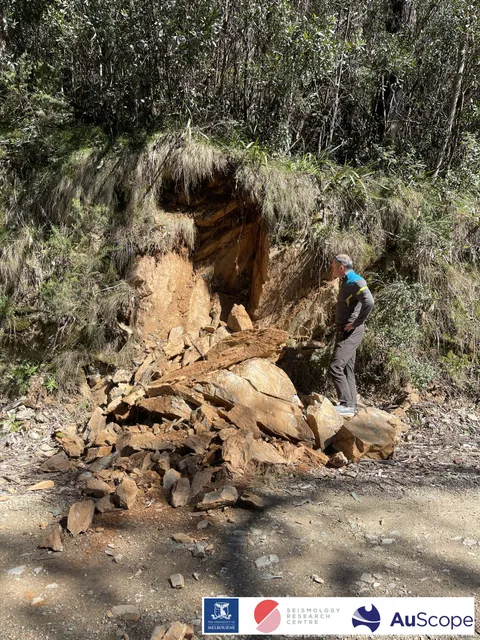 Events
Two years on from Victoria’s largest earthquake
Two years on from Victoria’s largest earthquake, felt by millions in southeast Australia — the more interesting points, and what people reported.
Seismology Research Centre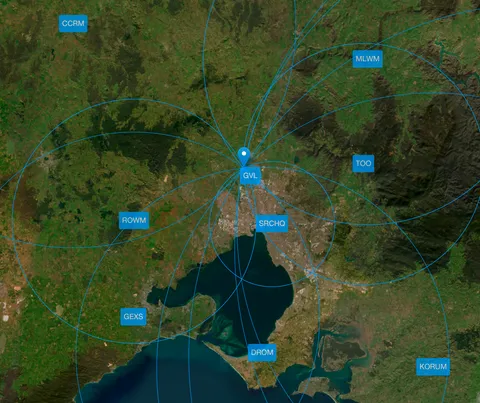 Events
Magnitude 4.0 Earthquake in Melbourne’s North
The magnitude 4.0 earthquake near Craigieburn on 28 May 2023 was recorded across Victoria — rich data on how ground motion changes with distance.
Seismology Research Centre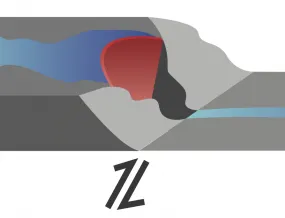 Science
Human Activity Can Trigger Earthquakes
Earthquakes happen when stress in the crust exceeds the strength of the rock — and plate motion isn’t the only source. How human activity can trigger them.
Seismology Research Centre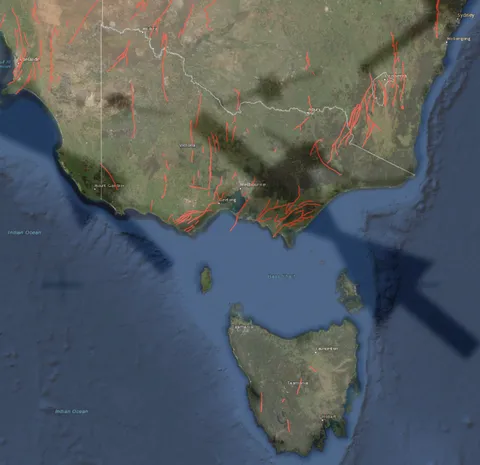 Science
Faults: Normal, Reverse, or Strike-Slip?
What are faults, what do the different types of fault mean, and what has that got to do with the SRC logo?
Seismology Research Centre Science
Locating the Origin of an Earthquake
When you feel the earth shaking, it might feel like the earthquake is right under you, but it’s likely that the earthquake started dozens of kilometres away.
Seismology Research Centre Science
Negative Magnitude Earthquakes
How can an earthquake have a negative magnitude? It’s got to do with ground motion and distance, and how sensitive seismographs have become.
Seismology Research Centre Data
SeedLink & Seismic Data Streams
What is SeedLink, and how can you share your seismograph data with the world using it?
Seismology Research Centre People
Get to know the SRC: Adam Pascale
Meet the SRC’s Chief Scientist who celebrates 30 years at SRC in 2021. You can find Adam as SeisLOLogist on BlueSky, Instagram, and TikTok
Seismology Research Centre Events
Largest Earthquake in Victoria’s history
The MLv5.8 (Mw5.9) earthquake of 22 September 2021 was the largest in Victoria since records began, with its epicentre 127km from our Melbourne office.
Seismology Research Centre Software
Locate an Earthquake with Waves
Waves now makes refining an earthquake location easier, with a depth slider, better mapping and a Melbourne sample earthquake to test your skills.
Seismology Research Centre Hardware
Customisable Linux SeedLink server
GeckoLink streams SeedLink data direct from site on a Raspberry Pi, with a web interface for remote visualisation, configuration and data download.
Seismology Research Centre Software
Free Earthquake Location Software
Waves 4.0 includes our eqFocus earthquake location and magnitude algorithms — free software for educational or operational use.
Seismology Research Centre Hardware
Analogue Earthquake & Vibration Sensors
Analogue earthquake and vibration sensors for Gecko recorders — for when the sensor needs to sit somewhere other than the recorder.
Seismology Research Centre Video
3D Earthquake Fault Plane Visualisation
Plot your earthquakes in Google Earth with eqServer and play them back over time — an insightful 3D visualisation of the fault plane.
Seismology Research Centre Hardware
Choosing an Earthquake Sensor
Choosing an earthquake sensor is not straightforward — dozens of accelerometers and velocity sensors, and what we have learnt from using them for decades.
Seismology Research Centre Engineering
Visualising a Building’s Response to Earthquake
Here’s an animation of the motion of a building, recorded on three floors during a magnitude 6.1 earthquake whose hypocentre was around 130km away.
Seismology Research Centre Hardware
New “Pro” range of digital sensors for 2020
The professional range of Gecko seismographs and accelerographs, redesigned for 2020: existing and new sensor technology in a smaller, modular body.
Seismology Research Centre Video
Track-celerograph
What happens when you take an accelerograph to record laps around a race track? You get lots of data to plot and analyse, and have lots of fun!
Seismology Research Centre People
Get to know the SRC: Russell Cuthbertson
Meet Russell Cuthbertson, the first employee recruited by SRC founder Gary Gibson — who has run our Queensland seismic networks for 20 years.
Seismology Research Centre People
Get to know the SRC: Elodie Borleis
Meet Elodie Borleis — from the SRC’s data analysis treadmill to a critical part of our earthquake hazard assessment team.
Seismology Research Centre Hardware
Specs, Damned Specs, and Instrumentation
Using consumer electronics analogies to demystify earthquake system specifications
Seismology Research Centre Data
Weekly Earthquake Activity Maps
Starting today the SRC will be publishing a weekly earthquake activity map for southeastern Australia on our social media platforms.
Seismology Research Centre People
Get to know the SRC: Wayne Peck
Meet seismologist Wayne Peck, the SRC’s longest continuously-serving employee — who joined in July 1990, six months after the Newcastle earthquake.
Seismology Research Centre Video
Waves Basics #2 – Frequency & Filtering
Here’s a quick demonstration of the frequency display and filtering capabilities of Waves.
Seismology Research Centre People
Get to know the SRC: Dr Dee Ninis
In the first of our Q&A posts we introduce you to Dr Dee Ninis, our resident earthquake geologist. Dee is also new to Twitter, so welcome her @DeeNinis
Seismology Research Centre Video
Waves Basics #1 – Getting Started
In the first of a planned series of videos, seismologist Adam Pascale explains how to use Waves to open earthquake data files and more.
Seismology Research Centre Video
Lightning Talk at SSA
Our Lightning Talk at the Seismological Society of America’s annual meeting — a rapid-fire 5-minute presentation that keeps pace with automatic slides.
Seismology Research Centre Field work
Gecko accelerographs monitoring PNG aftershocks
After the magnitude 7.5 Southern Highlands earthquake in Papua New Guinea, Australian seismologists installed a Gecko aftershock monitoring network.
Seismology Research Centre Research
Probabilistic Seismic Hazard Assessments – PSHA
Since its first seismic hazard report in 1976, the SRC has produced several hundred assessments — for dams, weirs, barrages, nuclear facilities and more.
Seismology Research Centre Software
Free Earthquake Analysis Software
Waves is free software for viewing earthquake waveforms — the result of over 15 years refining the SRC’s seismogram viewer, built to be easy to use.
Seismology Research Centre History
The 1976 Preston Earthquake
“How Seismology Found Me” — SRC seismologist Adam Pascale on the 1976 Preston earthquake his parents felt, the year the Seismology Research Centre began.
Seismology Research Centre Events
Largest Australian Earthquake in Two Decades
On 21 May 2016 a magnitude 6.1 earthquake struck central Australia, 125km west of Uluru — the largest in almost 20 years, recorded across our network.
Seismology Research Centre Field work
Building Monitoring in the Philippines
A commentary on the DPWH guidelines for earthquake recording instrumentation. By Adam Pascale.
Seismology Research Centre History
Celebrating 40 Years of Seismology
The 1st of January 2016 marked the 40th anniversary of the establishment of the Seismology Research Centre.
Seismology Research Centre Hardware
Seismographs & Accelerographs
SRC seismologists helped develop the latest generation of seismographs and accelerographs manufactured in Australia — instruments designed by seismologists.
Seismology Research Centre Hardware
Gecko SMA launches at PCEE
The Gecko SMA debuted at the 10th Pacific Conference on Earthquake Engineering, Sydney, November 2015 — built for structural and aftershock monitoring.
Seismology Research Centre Events
Recent Earthquake Activity in SE Qld
Two parts of southeast Queensland have seen significant earthquake activity — including a magnitude 5.2 near Mount Perry and its months of aftershocks.
Seismology Research Centre Engineering
Setting up an Earthquake Monitoring Network
Seismologist Adam Pascale on designing, installing and operating a local earthquake monitoring network — from station count to a Y-shaped layout.
Seismology Research Centre Research
Earthquake Hazard Assessments
The SRC’s first earthquake hazard report, in 1977, was for the Dandenong natural gas tank in Victoria — earthquake loading factored in before it was built.
Seismology Research Centre History
ESS Earth Sciences website launch
The new ESS Earth Sciences website launches — a showcase of the products our design, engineering and production teams have brought to life.
Seismology Research Centre Field work
SRC Visits Sri Lankan Hydroelectric Site
In December 2013 an SRC seismologist visited a hydroelectric site in Sri Lanka — a stable Precambrian setting like Australia’s, with low seismic recurrence.
Seismology Research Centre Video
Quick Quake version 2
Quick Quake version 2 is in the App Store — with a depth slider on the Locate screen, particularly useful when an earthquake is very close.
Seismology Research Centre Research
How small earthquakes affect Seismic Hazard
Why a complete earthquake catalogue matters for hazard studies in low-seismicity regions like Australia — and what the completeness magnitude, Mc, means.
Seismology Research Centre Video
New eqServer features for 2015
A huge eqServer update for 2015: MiniSEED data, SeedLink feeds, user-defined network maps on NASA imagery, subnetworks and station performance graphs.
Seismology Research Centre Research
Energy Groups Study Quakes Around Gas Fields
The SRC is monitoring seismicity in the North Perth Basin for a consortium of energy companies, around natural gas fields some 300km north of Perth.
Seismology Research Centre Field work
Jenolan Caves earthquake vault recommissioned
After 30 years unused, the 1959 Jenolan Caves earthquake vault — one of Australia’s earliest — is a working seismic station again, with GPS timing and 3G.
Seismology Research Centre Engineering
Construction Vibration Monitoring
Seismographs aren’t just for earthquakes: Kelunji recorders with geophones, accelerometers and microphones monitor vibration in mining and construction.
Seismology Research Centre Video
Follow us on Facebook and Twitter
Follow the SRC on Facebook and Twitter for news on smaller felt earthquakes, and on YouTube for videos — our Earthquake News page covers the big ones.
Seismology Research Centre Science
Calculating Richter Magnitudes
How we compare earthquake size to Richter’s original scale — why magnitude is logarithmic, and why an earthquake can have a negative magnitude.
Seismology Research Centre Video
Installing a Seismograph
A quick video of the steps to set up a basic seismic monitoring station with an SRC seismograph — including a concrete pier where no rock outcrops.
Seismology Research Centre- Hardware
Gecko SMA Preview
A sneak peek at the Gecko SMA: an all-in-one ±2g triaxial accelerograph on a single anchor point, recording GPS-synced data for a year or more.
Seismology Research Centre  Hardware
Strong Motion Accelerographs
What is the difference between a seismograph and an accelerograph — and which is used for structural monitoring, and which for earthquake detection?
Seismology Research Centre History
New SRC website
Our new website, on a content management system that adapts to desktop, tablet or smartphone — with older content still being moved across.
Seismology Research Centre Science
Differences in SRC and GA Location & Magnitude
Why do SRC’s earthquake locations and magnitudes differ from Geoscience Australia’s, and who is right? It depends — here is why.
Seismology Research Centre Events
AGU – Last Day
The end of our first AGU: bringing Quick Quake to the global seismological community, and the looks on people’s faces as the seismograms played.
Seismology Research Centre Events
AGU – Day Four
Day four at AGU — 18,000 delegates across the Moscone Centre’s halls in San Francisco, and a video of the scale of it.
Seismology Research Centre Events
AGU – Day Three
Day three at AGU: pretzels at the Geosciences in Germany stand, microbial life beneath the ocean floor, and plenty of “cool” and “neat” for Quick Quake.
Seismology Research Centre Events
AGU – Day Two
Day two at AGU: a busy stand, lots of interest in Quick Quake, and educators excited about using it in class with their students.
Seismology Research Centre Events
AGU – Day One
Day one of our first AGU Fall Meeting: arriving to an empty patch of concrete floor and turning it into a stand in our new logo colours.
Seismology Research Centre Video
Earthquake Waves and Data Analysis Video
A short video on how seismographs record earthquake waves, and how seismologists read those wiggly lines to calculate an event’s location and magnitude.
Seismology Research Centre Software
Quick Quake iPad app now in the App Store
Quick Quake for iPad is now in the App Store — a free app for seismologists using eqServer data archives, and for anyone who wants to locate an earthquake.
Seismology Research Centre Video
Quick Quake iPad app preview
A preview of Quick Quake, our iPad earthquake app, on our new YouTube channel — ahead of its launch at the AGU Fall Meeting in San Francisco, December 2013.
Seismology Research Centre History
Melbourne’s Earthquakes
Melbourne’s recent felt earthquakes are a reminder that Australia has earthquakes regularly — on average, several in eastern Australia every day.
Seismology Research Centre Research
Seismic instrumentation and bushfires
In January 2014 an SRC seismic recorder near Mt Zero in the Grampians survived being engulfed by bushfire — only its telemetry phone line was damaged.
Seismology Research Centre- Science
Fracking and Earthquakes
Fracking for geothermal energy, coal seam gas and carbon capture, and its links to earthquakes — what it means in simple terms, and how we can learn more.
Seismology Research Centre  Field work
Seismometers in Schools
Over 40 Australian schools now have professional-grade seismographs — adding to the national earthquake network and teaching students across the country.
Seismology Research Centre Engineering
Gas storage using underground caverns
eqServer and telemetered Kelunji seismographs used to monitor vibrations near a gas storage facility.
Seismology Research Centre Field work
Seismographs for Myanmar
SRC helps establish the first modern seismograph network to be owned and operated by the Myanmar people.
Seismology Research Centre Field work
PNG Island Accelerograph Network
A Strong Motion Accelerograph (SMA) network and an eqServer data hub installed on Niolam Island listens for local & regional events.
Seismology Research Centre Field work
Thailand Broadband Seismographs
Kelunji seismographs are used in Thailand for monitoring earthquakes for the local government geological department.
Seismology Research Centre Field work
Digitising the Philippines
In 2000 an Australian consortium upgraded the Philippines national monitoring network from analogue to digital.
Seismology Research Centre